[Member Newsletter] Just Shut Up?
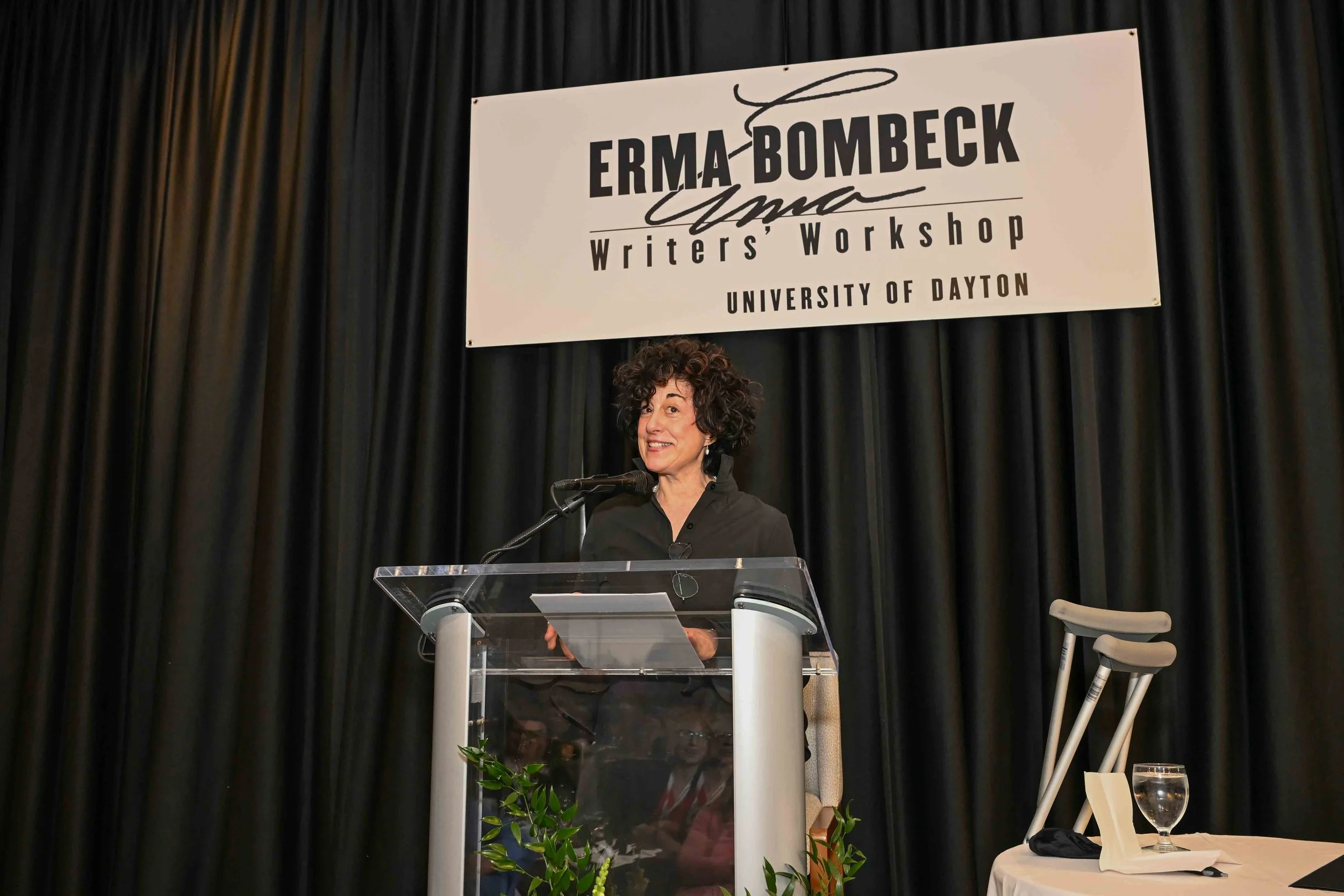
“There will be no more shutting up, my friends.”
by Grant Faulkner
Read on Substack if you’d like to leave comments.
Have you ever been told to be quiet? That you’re “too much”? That you’re too emotional?
These topics are on my mind because I recently attended the Erma Bombeck Writers’ Workshop in Dayton, Ohio, and I was particularly touched by the author Ann Garvin’s keynote. I call Ann the modern-day Erma Bombeck.
I was touched by the ways it was rousing and empowering for women, but also for the way she told the story of how people can be marginalized, shut out, and silenced by our cultural conventions and institutions.
I often say that I wasn’t exactly encouraged to be a writer. No one told me I had any talent for a good long while. But no one told me to shut up, either. So I worked hard to become a writer. I had an invaluable permission—the permission that I had a right to voice my story. It was a permission that I didn’t even recognize because it was such a part of my life. It felt like an invitation. Or enough of an invitation.
Ann, however, had been told that she was “too much” for most of her life—and to just shut up!
“As a kid growing up, not a day went by when I didn’t hear shhhh,” she said. “Why do you have to be so bossy? Why do you have to be so loud? Just shut up!”
In fact, the last words her father spoke to her were, “Ann, shut up.”
“There will be no more shutting up, my friends,” Ann said to an audience’s roar.
After getting a PhD and “living a life full of complications,” as she put it, Ann decided in 2004 to add one more complication to her life: writing a novel, even though she’d never written anything beyond academic papers.
“It’s never too late to write,” she said. But writers aren’t born. Ann wrote for six years before she finished and published her first novel, On Maggie’s Watch.
Even as she wrote more books, books that sold quite well, books that got her a job as a creative writing professor, she was then abruptly fired because the head of her department said her next book wasn’t a “big book.”
“Funny isn’t serious literature,” Ann said. She also felt that somehow she was a threat to him. “For some reason my presence made him feel yucky.”
“Too much” is the path to the truth
Ann took Erma Bombeck’s advice: “If you can't make it better, you can laugh at it.” Laugh through your words on the page. Laugh by insisting that your words belong in this world—no matter what the gatekeepers say.
“This might be my story, but I bet you have one just like it, every one of you,” Ann said. “It happens all the time to women, and it happens a lot more to funny women. Even if we’re writing about depression, motherhood, prostitution, or pedophiles.”
This reminded me of a talk by Cheryl Strayed that Brooke and I attended at “A Writing Room” conference a couple of years ago. Strayed told the story about how she’d often faced the diminishing comment that she was “too much.”
But she decided that being “too much” was not only a good way to live, but a way to write the truth. She said that artists need to be “too much”—because that it is an artist’s job.
“Write the stuff that's really uncomfortable and is too much. We aren't trying to please people—we're trying to do something bigger,” Strayed said.
By practicing being “too much” as part of our art, I think we invite more “too muchness” in. Yes, we might express ourselves more than we feel comfortable. We accept messiness. We create new definitions of being, new definitions of expression. Because that is where we feel life. In the “too much.”
Women’s fiction and “serious literature”
Ann explored the category of “women’s fiction,” which she found diminishing because it was separated from other fiction, and it wasn’t “the kind of fiction that gets awards.”
She said that from 1997 to 2025 the Thurber Prize for American Humor was awarded to 86.2% men and to only 13.8% women. Among the reasons for this, she said women faced a number of obstacles:
They're not told to, not nudged or recommended
They don't think their work qualifies
The historical winner pool discourages them
Time and bandwidth
Fear and public judgment
They're waiting until they're "ready"
But the biggest reason? “They listen to the people who told them to shut up,” Ann said.
Anne noted that she has applied to many an award that she hasn’t received, but that she keeps going with “grit, stubborn determination, Erma, and knowledge.”
“Don’t get in your way when you think you’re not good enough and simultaneously too much,” she said.
What happened to the book her department director said wouldn’t be a “big book”? It made the USA Today bestseller list and the income from it allowed Ann to write full time.
Ann told everyone in the room to grab the microphone, to not shut up, to embrace their too-muchness—and to look for inspiration in people like Erma Bombeck, who “made women's struggles best-sellers.”
"She did not shut up,” Anne said.
“The best thing you can do for this cause is to keep going. You've got to fight against the voices who want to tug you down, even if they are your own. Find the people who will cheer you on when you're struggling, but also the ones who will cheer you on when you succeed. Most of all when someone says you didn't write a big book, say, 'I am a big book!'”
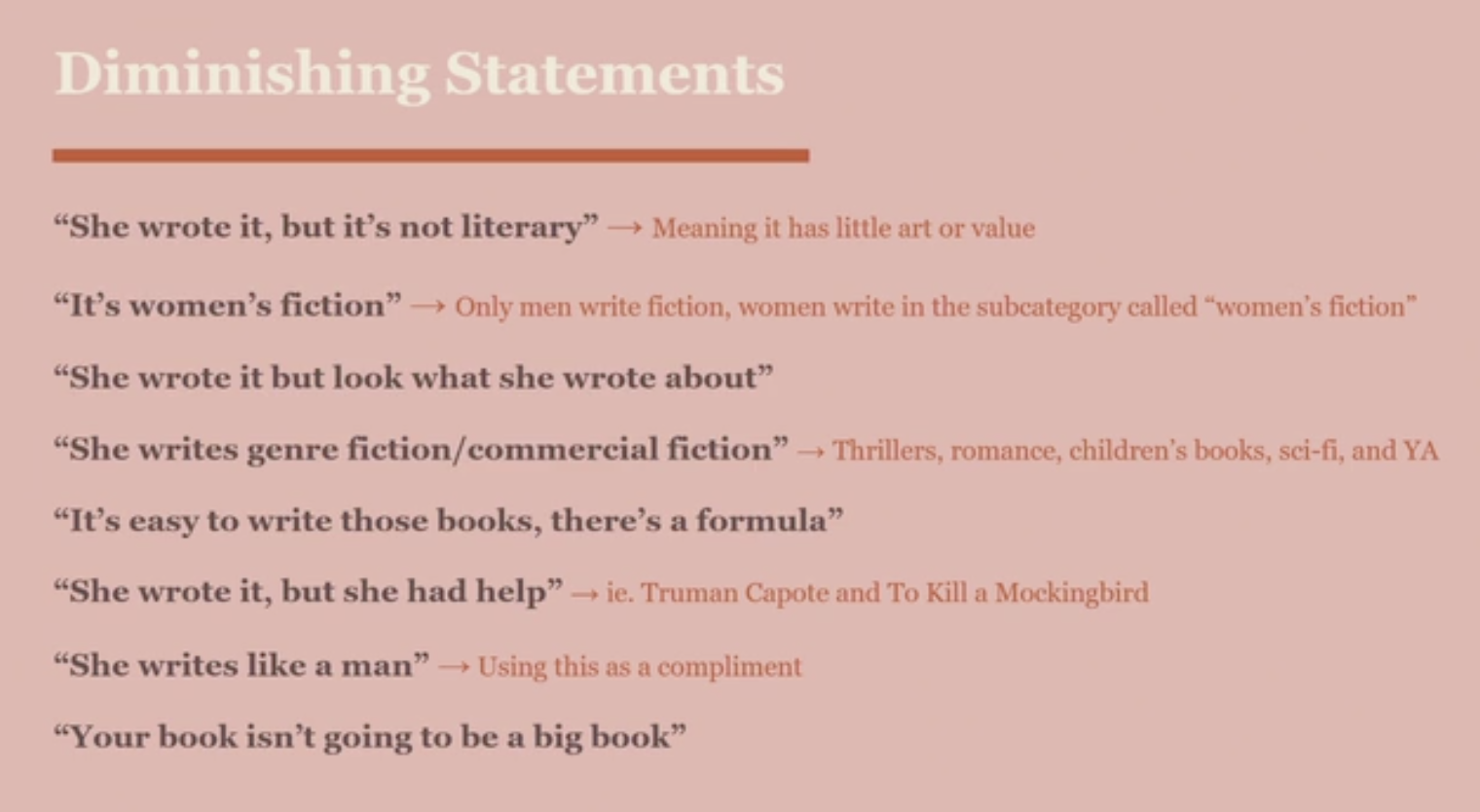
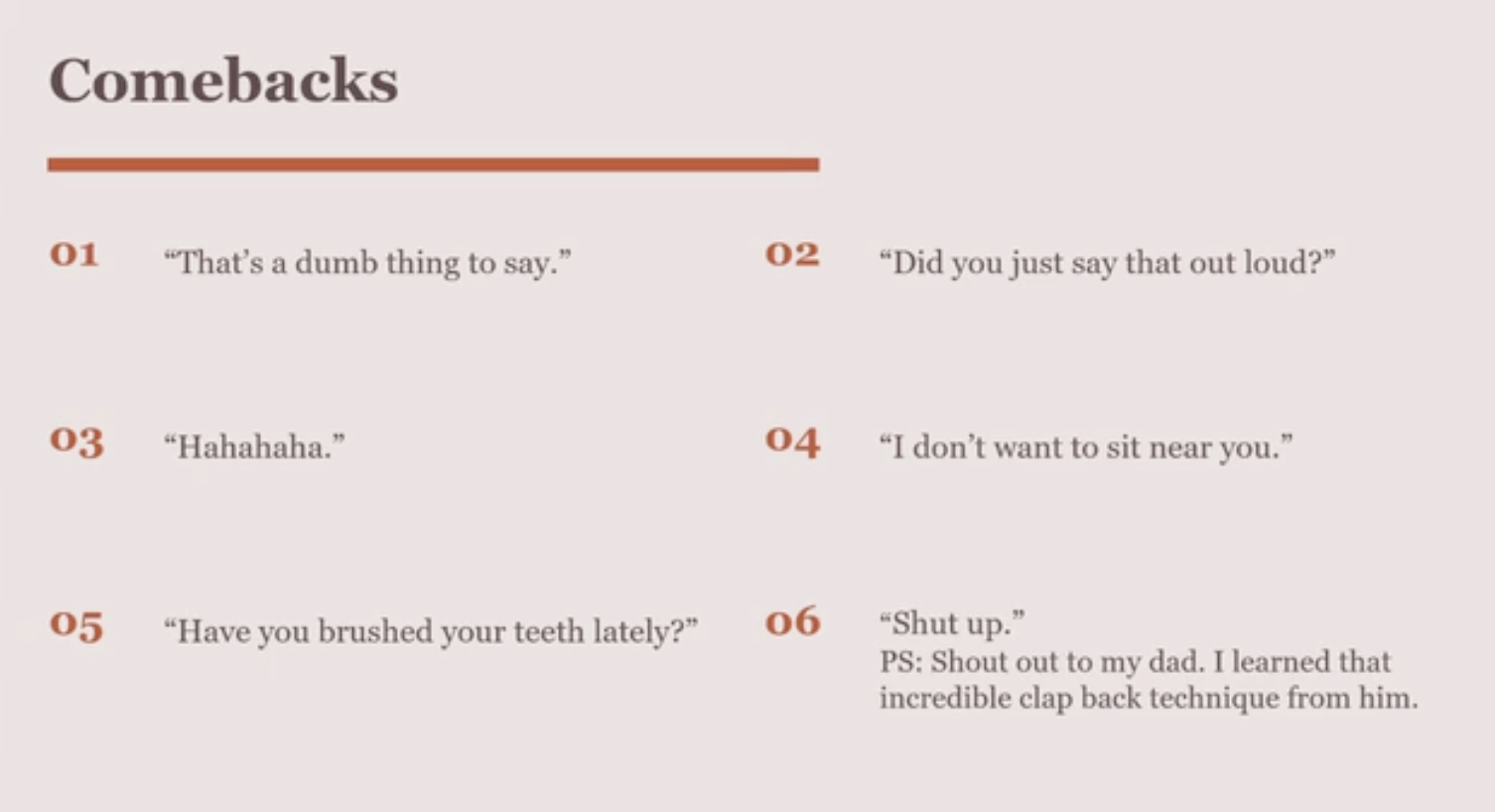
For inspiration, I’ve enclosed a couple of slides from Ann’s talk on “Diminishing Statements” and “Comebacks” below.
Also, if you want to watch Ann’s speech and other speakers at the conference, use the special discount code MEMOIR at Erma Home Schooling.
Coming Up for Members!
Craft Corner with Brooke Warner! Get ready to plunge into craft with Brooke tomorrow, Tuesday, April 7. In light of the incredible response to Sue William Silverman’s class, Brooke will teach on narration. We’ll go all in on the three narrative voices and how to choose and how to stay in control. We’ll look at time, pacing, and how to balance scene vs. reflection.
The Story of Our Lives: Writing Toward What Matters with Mark Nepo. If you’ve not experienced the heart-felt presence of Mark Nepo, you’re in for a treat. On Thursday, April 16, Mark will guide writers into a heart space, the place beyond the events and into the meaning of what their lives have been teaching them all along. This class comes with membership, or a la carte.
Weekly Inspiration
“Real You is all you have, and all other paths are false. And in the best case, Real You is so happy to finally be recognized, it rewards you with Originality.”
―Mary Karr, The Art of Memoir
Weekly Prompt
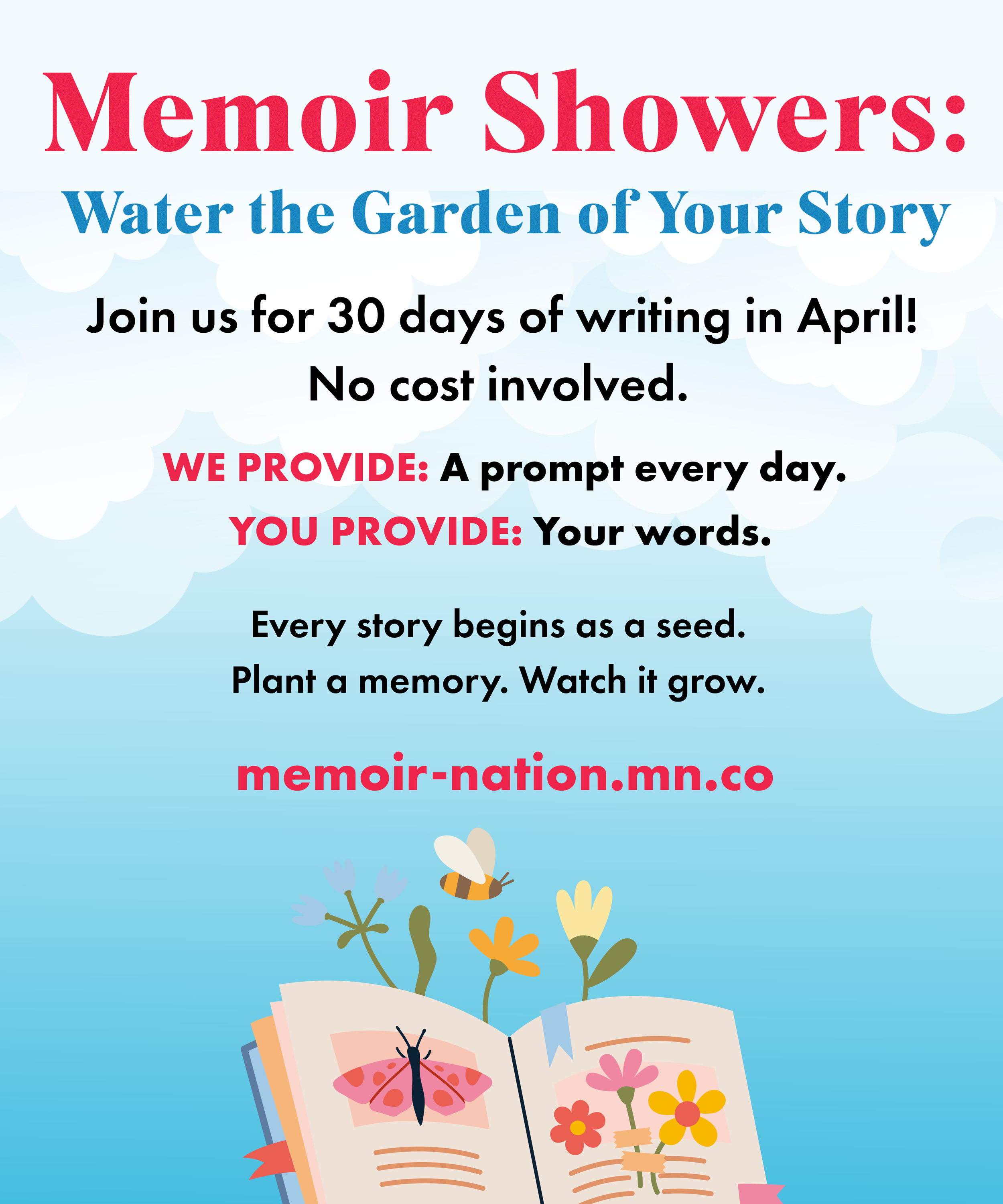
See Monday’s prompt from Memoir Showers: “Write about something you said that you can't take back.”
We’re providing a daily photo prompt as well, so check it out.
Weekly Question
Answer this in the Community.
Have you been told you’re “too much”? Have you been told to “just shut up”? If so, how has that affected you as a writer, as a person? Does it still affect you? How do you write through it?

For many, spirituality is a private inner journey filled with nuance and informed by culture, family of origin, life experiences both positive and negative, and much more.
Guest Alicia Jo Rabins shares her own journey at the heart of her new memoir, When We’re Born We Forget Everything—one that started with a fairly typical secular Jewish suburban upbringing and later twists and turns through the spiritual, the sacred, and the mystical. Her memoir is a beautiful mosaic that invites readers to consider and contemplate their own understanding of the Divine. This week, inspired by Alicia Jo, Brooke and Grant do just that, in addition to talking about publishing’s relationship to spiritual (and religious) works.
Alicia Jo Rabins a writer, musician, performer, and feminist Torah teacher. Her spiritual memoir, out on Schocken Books, is When We’re Born We Forget Everything. She is the author of four additional books, including the poetry collections Divinity School and Fruit Geode. As a songwriter, violinist and composer, Rabins tours internationally with Girls in Trouble, her indie-folk song cycle about women in Torah. Visit her at www.aliciajo.com