
[Member newsletter] 5 Questions with Mark Nepo
On writing, expression, and meaning-making
by Brooke Warner
Read on Substack if you’d like to leave comments.
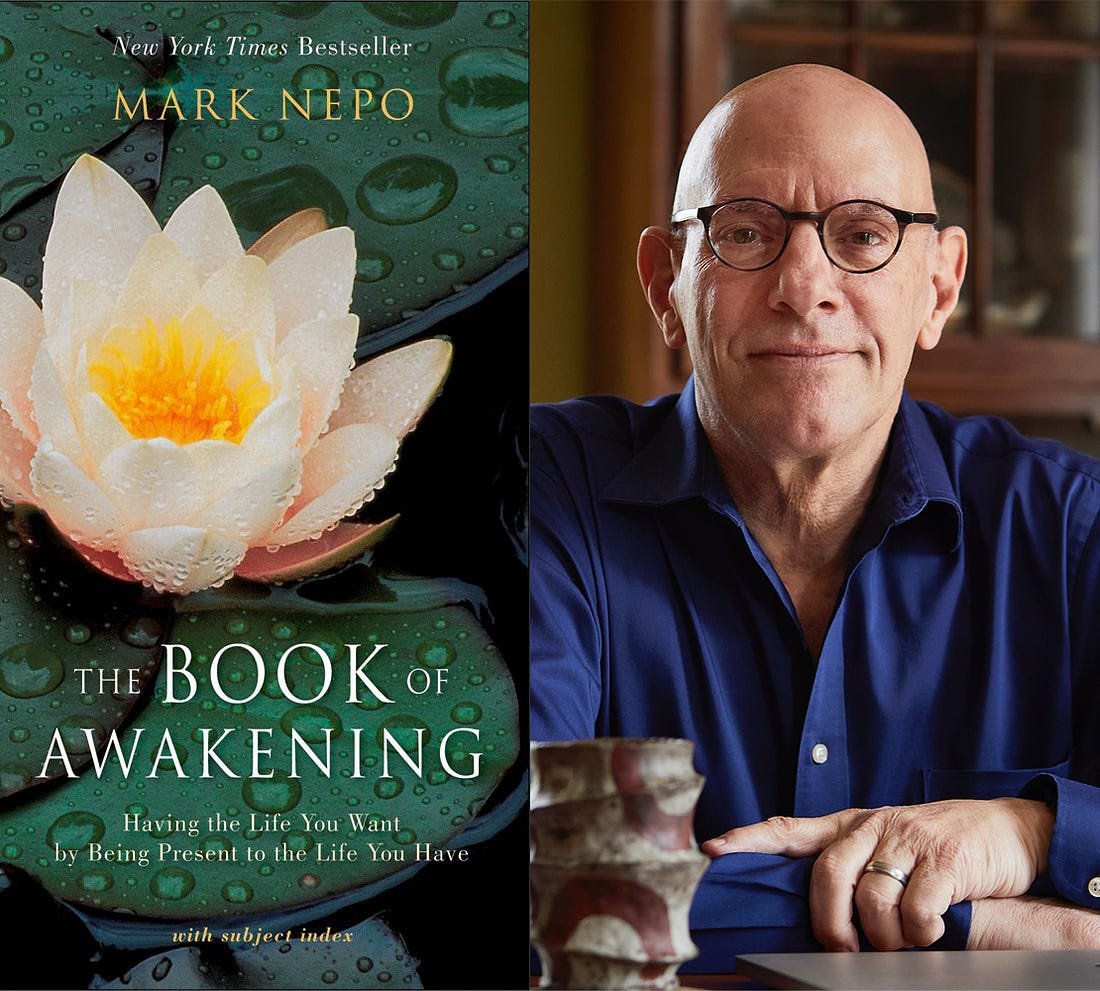
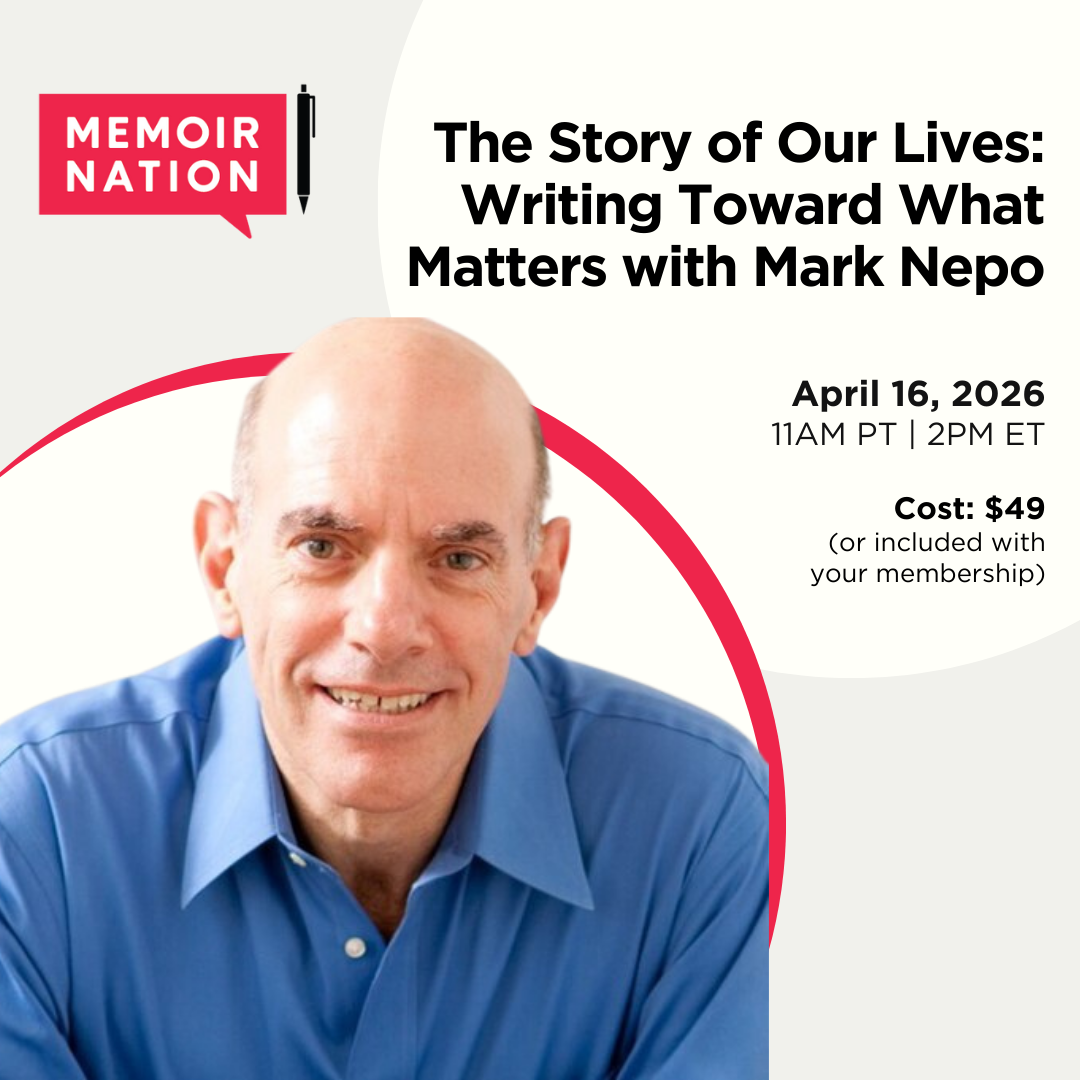
This week, on Thursday, April 16, Mark Nepo, spiritual teacher and author of 27 books, including the best-selling The Book of Awakening,will join Memoir Nation to offer a one-hour class: The Story of Our Lives: Writing Toward What Matters. This is a rare treat and gift for Mark to teach on the subject of writing and personal expression. We hope you’ll consider joining us! And we are happy to share with you this interview with Mark Nepo, who answers five questions (below) about writing, expression, and meaning-making.
About Mark’s Class:
What if the real work of memoir isn’t shaping the story, but listening for it? In this reflective and grounding class designed for memoirists, Mark Nepo shares insights from a lifetime of storytelling, spiritual inquiry, and lived experience to help writers uncover the deeper narrative running through their lives. Memoirists will explore how attention, curiosity, and honesty transform memory into meaning, and how our individual stories connect us to one another. This class is for writers ready to move beyond events and into the heart of what their lives have been teaching them all along.
5 Questions with Mark Nepo
Brooke: Listening is an important theme in your work. Can you say more about how you think writers can listen for their stories, or share an example of how you do this in your own work?
Mark: Over the years, I’ve learned that writing is more about staying in relationship with the depth of life than creating something out of nothing. And so, writing has become a journey of staying in conversation with life and listening and taking notes. As such, we discover more than invent. This is one of the most difficult things to teach young writers: to listen for and follow what comes alive rather than bending what comes to the intended outline of our story.
A transformative example for me was when I was working on a spiritual novel called This Strange and Blessed Humanness. The second half of the novel is set in India in the 1800s. While working on a key chapter about a deep conflict between the main characters, a man-eating tiger appeared at the edge of the story. I thought it was interesting but a distraction from the turning point I had planned.
So I kept on with what I had been wanting to explore. But the tiger kept appearing and getting closer to the scene. I finally stopped what I was doing and realized that I knew very little about tigers. So I took a break and began to research them. Well, it turned out that the tiger was essential to the story, which of course was an unconscious mirror of the story of my life. And my research wasn’t a break from writing but where all of my work on the novel was leading. By listening to the story, I discovered what the novel is really about.
Brooke: You’ve talked about self-expression as a birthright, and have long championed your own readers to be attuned to saying what needs to be said, to raising their voices and sharing their messages. Why do you think it’s so hard for humans to do this when we long to be heard?
Mark: First, let me affirm that how we feel and perceive and how we express are how the heart inhales and exhales. It is necessary in order to live. One of the great misperceptions of the modern age is that art in its many forms is entertainment when it is and always has been medicine.
So, no matter how we fear being misunderstand, misperceived, or even rejected, we need to breathe with our heart. That need never goes away. When we are overly defined or concerned with the opinions of others, we can resist this basic human need to express. All in all, it’s yet another way that we are challenged to choose love over fear.
Brooke: You write with remarkable openness about illness, loss, and transformation. How do you navigate the tension between what you feel compelled to share and what feels too raw or private to put on the page?
Mark: I have always firmly believed that when honest and authentic, what is personal reveals what we all have in common, what is personal when offered reveals what is universal. Though the details may differ, the core experience is the same. And so, being this open is really a practice in being who we are everywhere.
Now, certainly, we have to consider, especially in person, if it’s safe to be vulnerable and is the person we’re sharing with is trustworthy. But on the page, I remain dedicated to the fact that this space is inherently safe and sacred. The page is the place to be vulnerable, especially since we’re required to be vulnerable in order to change and grow.
So I never hold back when writing about my own experience, but always honor the privacy of those in my life, should their experience come into play. What becomes extremely important in sharing in this way is to keep exploring our shared meaning and to not settle for the personal significance of what happens to us.
Brooke: You address in the class description how to transform memory into meaning. What’s a tip for a writer who struggles to remember, or who looks back on their life and fears the negativity they will have to enter to tell their story?
Mark: I think the most important thing is to record the evidence of life that is calling without judgment or conclusion. For it’s lens of judgment that keeps us from looking deeply. Recording things specifically helps us to retrieve what matters without labelling it true or false, good or bad, or positive or negative.
For instance, last year I had major back surgery which was very difficult and painful, though I’m grateful to be pain-free now. That journey transformed me. In writing about it, I needed to move through the memories of pain to get to the lessons. It helped to enter specific points of my journey like a painter, brushing in the details without commentary at first. Once I had the scene in view, I could reflect on the lesson held there. This is akin to working with trauma. While we need to move through the difficult threshold of our memories, they are just the entry point. The journey is ultimately healing.
Brooke: You’re a storyteller who weaves the stories of others and your own stories into your work. Why do you think writing personal narratives matters?
Mark: Before there were universities and degrees, there were stories. This is how the gifts and quandaries of living were passed on, each generation adding to the never-finished stories. And since we are the same at heart, weaving the stories of others with our own brings a constellation of lived wisdom into view. Then, it’s possible to reflect on what we’ve all been learning. So, I feel committed to weave and thread all kinds of stories as they want to be together: personal, historical, mythic, and imagined. It’s important to let the stories lead us.
Weekly Inspiration
Art Lesson
by Mark Nepo
The mind moves like a pencil.
The heart moves like a brush.
While the mind can draw
exquisite prints, the heart
with its deep bright colors
will ignore the lines.
If you only follow your mind,
you will never go outside the lines.
If you only follow your heart,
what you touch will never
resemble anything.
We must be
a student of both.
For the mind can build
itself a home, but only
the heart can live in it.
Weekly Prompt
See Monday’s prompt from Memoir Showers: “Write about a moment you're not proud of — from a place of curiosity rather than judgment.”
We’re providing a daily photo prompt as well, so check it out. Our Community is free to join.
Weekly Question
Answer this in the Community.
Is there a memory or experience you’ve circled around but haven’t yet found the courage to put on the page—and what do you think is holding you back?
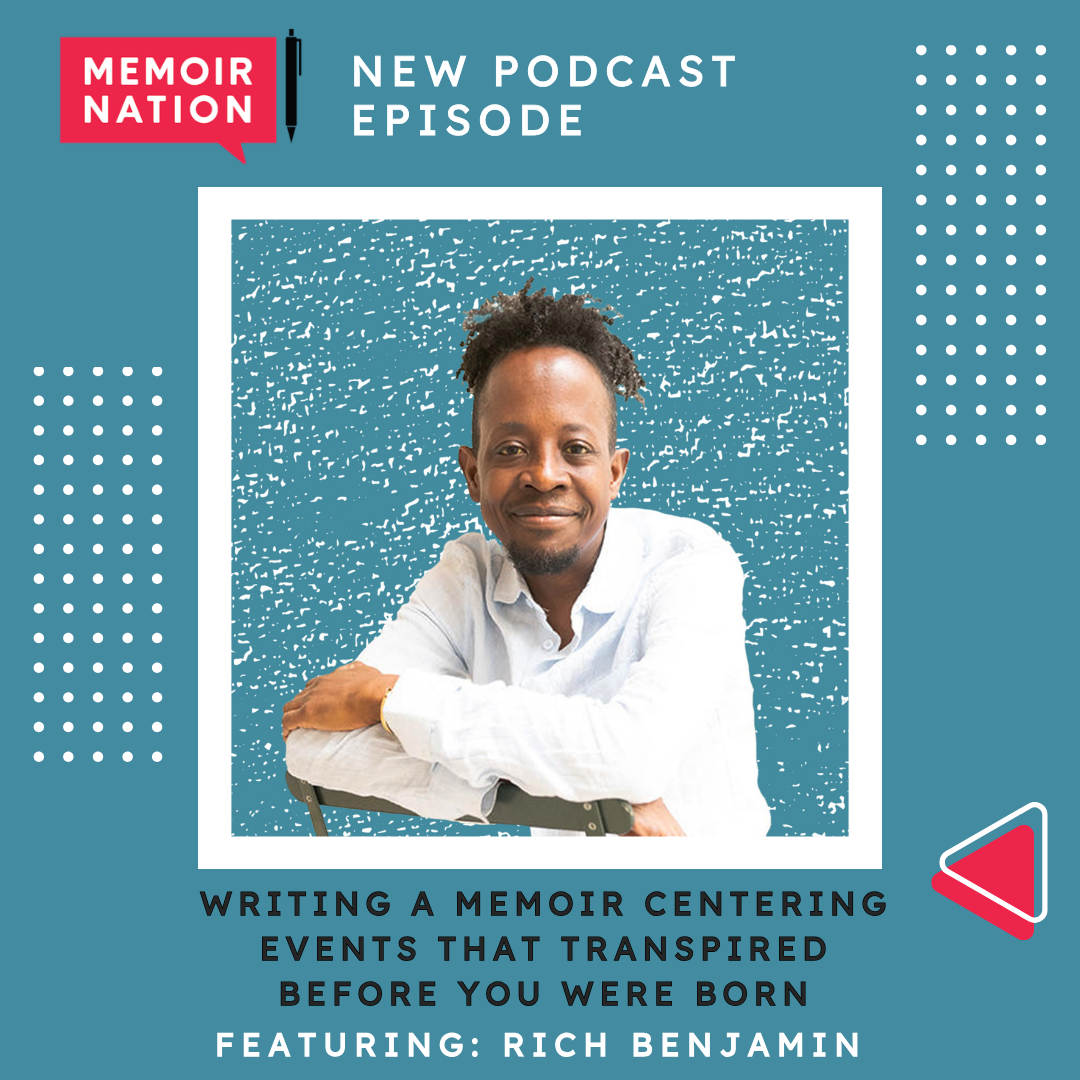
How do you get into a story that centers events you don’t remember because you weren’t alive to witness them? That’s what we’re covering today in an episode that reaches into considerations of intergenerational trauma, and how even what’s not said gets transmitted from one generation to the next.
Rich Benjamin is an award-winning writer, cultural critic, and memoirist whose work investigates political, social, and economic power through deeply researched storytelling. Rich is the author of the memoir, Talk to Me: Lessons from a Family Forged by History, and Searching for Whitopia, a groundbreaking immersive study that presciently examined the rise of white anxiety and nationalism in the United States. His writing has appeared in The New Yorker, The New York Times, and other major publications, and he is a frequent commentator on NPR, MSNBC, and CNN. His memoir was just shortlisted for the 2026 J. Anthony Lukas Prize Project Awards.
