[Member newsletter] The Past Is Never Past
The Past Is Never Past
Exploring the nature of memory
by Grant Faulkner
Read on Substack if you’d like to leave comments.
I recently taught a writing class, and I decided to ask questions about the big topics of storytelling. Things like, “What is drama?” “What is poetry?” and “What is memory?”
It was interesting to talk about these words we use all of the time and to deconstruct them and share our personal experiences with them—and by defining them anew, opening them up in a fresh way.
Memory is particularly interesting because it’s at one point scientific (just how do our brains and bodies create, hold, rewrite, and lose memories), yet it’s also personal—we consciously and unconsciously shape our memories.
For memoirists, the most important thing to realize is that memory is not a recording device—which can be both liberating and challenging.
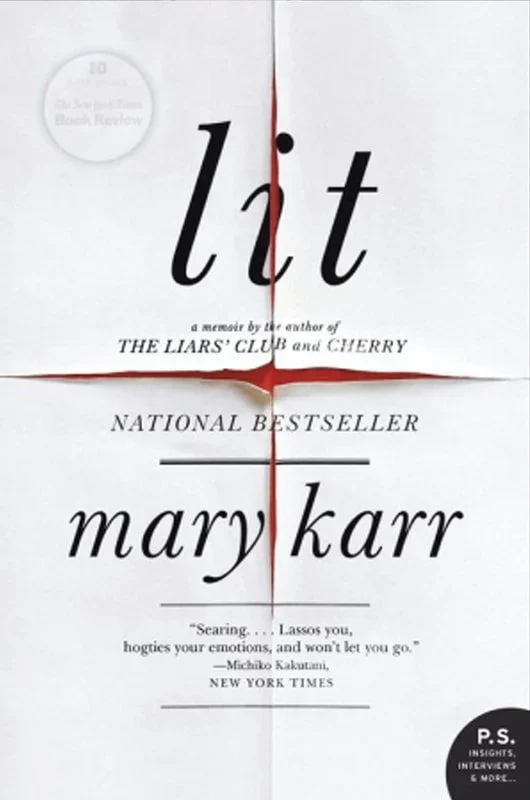
As Mary Karr said, “Memory is a pinball in a machine—it messily ricochets around between image, idea, fragments of scenes, stories you’ve heard. Then the machine goes tilt and snaps off. But most of the time, we keep memories packed away. I sometimes liken that moment of sudden unpacking to circus clowns pouring out of a miniature car trunk—how did so much fit into such a small space?”
And those clowns might be dressed differently every time they come spilling out.
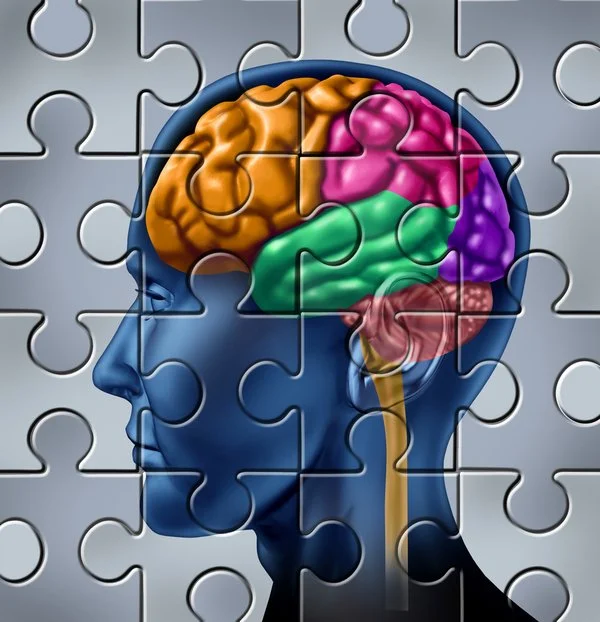
Neuroscientists have understood for decades what writers have always suspected: every time we remember something, we are not playing back a stored file but reconstructing the event from fragments—sensory impressions, emotional residue, narrative expectations, and the stories we have been told about ourselves by others (and ourselves).
The “rewriting” is different every time. Memory is not a photograph. This is why two people who witnessed the same event can remember it so differently that they seem to be describing separate occasions. Neither is lying. Both are telling the truth—their truth, the truth of how the event was stored and how it has been reconstructed in the years since.
How to be a “reliable narrator”
“There is no such thing as accurate self-knowledge,” Mary Karr writes in The Art of Memoir. “We are all too subjective, too clothed in the biases we formed in childhood.”
The memoirist’s job is not to pretend otherwise but to write from honest subjectivity—to be a reliable narrator of an unreliable archive.
Psychologists have found that we tend to remember what is emotionally significant, what is novel or unexpected, what is associated with strong sensory experience, and—crucially—what confirms the story we already tell about ourselves.
This last tendency is perhaps the most important for writers to understand. We remember selectively, and the selection principle is almost always narrative: we keep what fits the story, and we quietly discard or revise what doesn't.
Ask yourself: what is the story you tell about your childhood? Your family? Your younger self? Then ask: what memories support that story—and what memories have you not thought about in years because they complicate it?
This is where memoir begins. Not in the memories we have polished by years of retelling, but in the memories we have been avoiding, the memories that don’t fit, the memories that contradict the official version.
“The writer must be willing to examine the family myth,” Vivian Gornick writes, “with a level of ruthlessness that is actually a form of love.”
The family myth is the story the family tells about itself. The memoir is what happens when someone decides to test that myth against what they actually remember—and what they remember despite themselves.
Creating conditions for the past to arrive
Activating memory for writing is less about straining toward the past than about creating conditions in which the past can arrive. The senses are the fastest path. A smell, a texture, a specific quality of light—these bypass the narrative mind and go straight to the body's archive, which stores experience differently than the thinking self does.
Proust understood this: his famous madeleine scene works not because it reminds Marcel of his childhood intellectually, but because it delivers the experience of his childhood directly, bypassing all the years of interpretation that have accumulated between then and now.
For writers, the invitation is to find that object—the worn stair, the specific sound of a screen door, the smell of a particular soap—and let it speak.
When it speaks, trust it—even when it seems wrong. Especially when it seems wrong. A memory that contradicts what you know to be factually true is not a failure of memory. It is a record of how you felt. Write toward that feeling.
“Gesture writing” to unearth memories
In Memoir Showers (join here for this free April offering), we have a text prompt and a photo prompt each day to try to help you retrieve experiences and shape your story.
In my recent class, I did an exercise similar to “gesture drawing” in art. Gesture drawing is a rapid, expressive sketching technique focused on capturing the essential action, energy, and pose of a subject rather than fine detail, usually within 10 seconds to 5 minutes.
I did 10 “writing sprints,” giving writers two minutes each to explore the following questions:
What is the earliest memory you have that you’re not sure is actually yours—that might have been told to you so many times it became a memory?
What is a smell that takes you somewhere specific? Where does it take you, and why that smell?
What is a piece of clothing you remember with unusual precision—not because it was special, but because it was ordinary?
What is the first time you remember being aware that adults didn't have everything figured out?
What is a meal you remember that had nothing to do with the food?
What is a “first”—first kiss, first day at school, first time flying, first time driving?
What is the last thing you remember your grandparent saying to you—or if you didn’t know your grandparents, what is the last thing the oldest person you knew well said to you?
What is a sound from your childhood that no longer exists in the world?
What is a piece of music that belongs entirely to one period of your life and cannot be separated from it?
What is the first time you remember choosing to lie, and what did it feel like in your body?
I also gave writers 15 minutes to do what Joe Brainard did in his memoir I Remember—abook that is composed entirely of sentences beginning “I remember...”
The accumulation of mundane, funny, heartbreaking memories produces something that feels like a complete portrait of a life and an era. It is technically not a story but it reads as one—the list itself becomes the narrative arc.
Remember to remember. Remember to write it all down.
Weekly Inspiration!
Weekly Prompt
See Monday’s prompt from Memoir Showers: Write about a moment when your life divided into before and after. It might be a moment when your fundamental beliefs and opinions about something were changed. Perhaps you suddenly started–or stopped–believing in God. You don't have to name the thing directly—write around it until it comes into focus. Write about your transformation.
We’re providing a daily photo prompt as well, so check it out.
Our Community is free to join.
Weekly Quote
“You own everything that happened to you. Tell your stories.”
—Anne Lamott
Weekly Question
Answer this in the Community.
When you write from memory, do you feel like you are recording or inventing? Is there a difference? What does writing a memory do to the memory? Does it fix it, clarify it, change it, or preserve it?

This week we’re talking about form with yet another memoirist who defied conventions to create something unique and beautiful. Guest Danielle Bainbridge’s new book of personal essays, Dandelion, covers many topics—mental health, race, body, feminism, and so much more. Myriam Gurba calls her work “kaleidoscopic” and we ruminate on what that means in the context of form. This is a conversation on following the threads of your inspiration, writing the book you want to write, finding a publisher who gets it and allows you to do what you want to do. And in the trend, we talk about the death of the mass market paperback. Never a dull moment in book publishing!
Danielle Bainbridge is Assistant Professor of Theatre, Black Studies, and Performance Studies at Northwestern University. Her first academic book, Currencies of Cruelty: Slavery, Freak Shows, and the Performance Archive, is forthcoming in 2025 from NYU Press. Danielle has received scholarships and residencies from Tin House, the Adirondack Center for Writing, and the Banff Centre in Canada. Her web series and media work have been nominated for three Daytime Emmy Awards and one NAACP Image Award. She lives and loves in Chicago with her partner and two naughty cats.
Join the Memoir Nation Book Club!
Members, RSVP for the next book club on Friday, May 1!