
by Grant Faulkner
Read on Substack if you’d like to leave comments.
*****
I didn’t feel like writing this newsletter today. I almost didn’t. You can probably guess the reasons why. It seems like our world falls to a new low each day. It’s scary. I feel helpless. Sometimes hopeless.
I decided to return to an essay I wrote just after the 2024 elections, which now seems like a quaint and somewhat innocent time.
A friend had sent me this quote by Hannah Arendt from The Human Condition:
“The smallest act in the most limited circumstances bears the seed of … boundlessness, because one deed, and sometimes one word, suffices to change every constellation.”
I remember the 2016 election. I was the Executive Director at National Novel Writing Month, which drew thousands of writers every November, and it was disturbing to watch writers’ stories literally collapse the day after Trump won in 2016. We had more writers than ever drop out that year. But it wasn’t only NaNoWriMo writers. Many of my friends, professional writers, stopped writing. They were traumatized. They were depressed.
I always say that I don’t believe in writer’s block, but writing is difficult, and sometimes impossible, for a battered brain. Trauma and depression turn off the spigot of creativity.
It’s important to recognize trauma and depression and not force words onto the page. At the same time, the reason I decided to write this newsletter is that we need to believe in the possibilities of our stories—and believe that our stories make a difference—because we need the truth and beauty of our words more so now than ever.
How art can deliver us
It’s easy to think that our art is trivial when it’s up against such a menacing and malevolent block of history as we’re living through, but the opposite is actually true: our art isn’t trivial; it’s what can deliver us.
James Baldwin expressed the importance of the role of the artist better than I can:
“You think your pain and your heartbreak are unprecedented in the history of the world, but then you read. It was Dostoevsky and Dickens who taught me that the things that tormented me most were the very things that connected me with all the people who were alive, or who ever had been alive. Only if we face these open wounds in ourselves can we understand them in other people. An artist is a sort of emotional or spiritual historian. His role is to make you realize the doom and glory of knowing who you are and what you are. He has to tell, because nobody else can tell, what it is like to be alive.”
An artist is a sort of emotional or spiritual historian.
Ponder this the next time you sit down to write. We are the seers, the tellers—this is our role, our responsibility—to attune our overly sensitive writerly radar to the world—to recognize how irony has flipped stories throughout time—to recognize the portals of possibility that will open— because those portals have opened in every era.
“Poets are the unacknowledged legislators of the world,” said Percy Bysshe Shelley.
And the legislation poets write allows us to feel, to think, to touch, to witness, to create, to … rebel.
To create is an act of rebellion:
“Art is fueled by rebellion: the need, in some amounting to obsessions, to resist what is, to defy one's elders, even to the point of ostracism; to define oneself, and by extension one's generation, as new, novel, ungovernable,” said Joyce Carol Oates.
Try to imagine a crucial cultural turning point without art to represent it.
Or, no, try to imagine a crucial cultural turning point without art to lead it.
Think back to the books that were on a bookstore’s shelves 100 years ago and compare them to the books you’ll find now. Sure, we’re still dealing with systemic biases, and things are far from perfect in our book world, but we also have stories by writers of color, LGBTQ+ authors, disabled authors—stories that were absent throughout most of our nation’s history.
Our stories shape our world in more fundamental ways than any public policy.
As Rebecca Solnit tweeted after the 2024 election, “They want you to feel powerless and surrender and let them trample everything and you are not going to let them. You are not giving up, and neither am I. The fact that we cannot save everything does not mean we cannot save anything and everything we can save is worth saving.”
The kindness every era holds
Exploring the human condition is not beside the point in dire times like this; it’s the point. By writing not only are you putting your story into the world, you’re a role model to others to do so.
Howard Zinn’s words provided me a lot of hopefulness—because we need to see the “compassion, sacrifice, courage, kindness” that is part of every era.
“To be hopeful in bad times is based on the fact that human history is not only of cruelty, but also of compassion, sacrifice, courage, kindness. If we see only the worst, it destroys our capacity to do something. If we remember those times and places where people have behaved magnificently, this gives us the energy to act. And if we do act, in however small a way, we don't have to wait for some grand Utopian future. The future is an infinite succession of presents, and to live now as we think human beings should live, in defiance of all that is bad around us, is itself a marvelous victory.”
Let us all celebrate our need to pen stories, our need to feel deeply, our need to be in service to our stories. Think of those words: to be in service to your story. It’s bigger than you. Your story is part of the constellations of our world.
I hope the quotes below help you to be in service to your story and to fuel your creative spirit.
Malala Yousafzai
“One child, one teacher, one book, one pen can change the world.”
Elie Wiesel
“Silence encourages the tormentor, never the tormented.”
Rebecca Solnit
“Writing is saying to no one and to everyone the things it is not possible to say to someone. Or rather writing is saying to the no one who may eventually be the reader those things one has no someone to whom to say them.”
James Baldwin
“Artists are here to disturb the peace.”
Walt Whitman
“There is no week nor day nor hour when tyranny may not enter upon this country, if the people lose their roughness and spirit of defiance.”
Edward Abbey
“One single act of defiance against power, against the State that seems omnipotent but is not, transforms and transfigures the human personality. At least for a time. For a while. Perhaps that is enough.”
Vincent Van Gogh
“I can very well, in life and in painting, too, do without God. But I cannot, suffering as I do, do without something that is greater than I am, that is my life—the power to create.”
Ai Weiwei
“My favorite word? It’s ‘act.’”
Twyla Tharp
“Creativity is an act of defiance.”
Diego Rivera
“The role of the artist is that of the soldier of the revolution.”
Theaster Gates
“I am invested in illustrating the possible.”
Philippe Petit
“There is a certain rebellion when you are an artist at heart, even if only in the art of living.”
Toni Morrison
“This is precisely the time when artists go to work. There is no time for despair, no place for self-pity, no need for silence, no room for fear. We speak, we write, we do language. That is how civilizations heal."
Osho
“Creativity is the greatest rebellion in existence.”
Upcoming Classes
A Special “All About Revision” Event
Writing is re-writing, as they say. Join us for a special session to explore approaches to revision on Wednesday, Feb. 11 at 11 Pacific/2 Eastern.
An Inspirational Quote
“This is the only real concern of the artist, to recreate out of the disorder of life that order which is art.”
—James Baldwin
A Memoir Prompt
Write about your wildest, most harebrained ideas and dreams—past, present, or future? What if one of your ideas happened?
Weekly Question
Answer this in the Community.
Why does your writing matter in times when the world is dark?
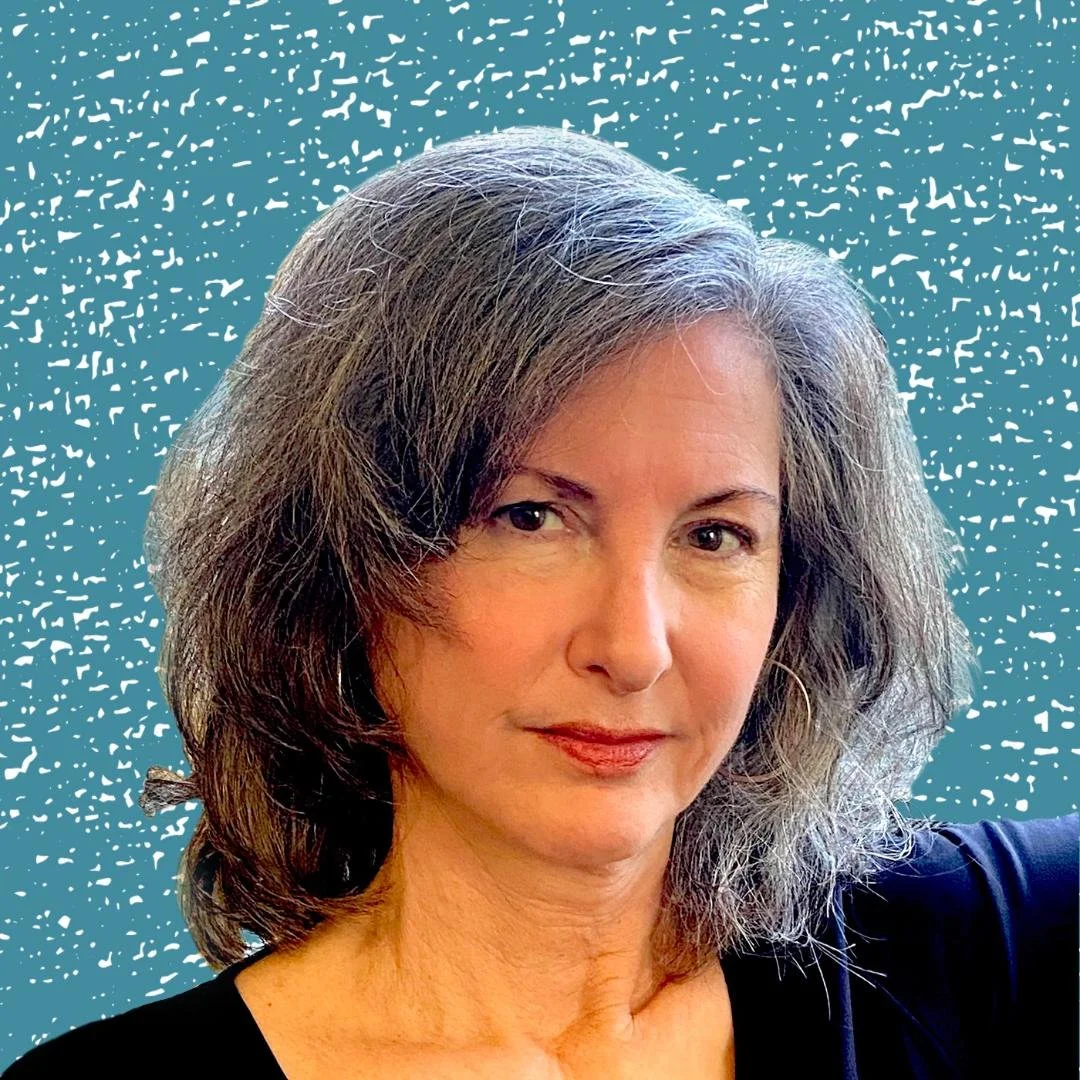
This week’s episode touches upon so many interesting topics for memoirists—from catalyst moments that create the foundational stories of our memoirs; to the ways we can prism experience through “before” and “after”; to the journey of titling and subtitling; to the wild and unpredictable individual journeys that lead to published books. Author Karen Palmer is an insightful guest whose memoir and journey to publication will inspire and propel you along, and remind you to stay the course. Your story matters!
Bio: Karen Palmer’s memoir She's Under Here grew out of her award-winning essay The Reader Is the Protagonist, first published in VQR and selected by Leslie Jamison for inclusion in Best American Essays 2017. She has received a Pushcart Prize and grants from the NEA and the Colorado Council on the Arts, and is the author of the novels All Saints and Border Dogs. Other work has appeared in the Kenyon Review, Arts & Letters, The Rumpus, and Kalliope. She teaches at Lighthouse Writers Workshop in Denver, and lives with her husband in California.