
by Brooke Warner
Read on Substack if you’d like to leave comments.
This week on the Memoir Nation podcast, we interview guest Sarah Aziza, author of The Hollow Half: A Memoir or Bodies and Borders. The Hollow Half is what’s called a literary memoir, a category of memoir designated for writers who have a particular style, whose work is particularly artistic, rhythmic, lyrical, and beautiful. When a memoir is described this way, it speaks to the writing. Literary memoir is elevated, meaning that the writer is paying attention to the language, to the way the words sound on the page, and to the images evoked from the reading experience.
In the conversation section of this week’s podcast between myself and Grant, I asked him whether he strives for his work to be art, and it wasn’t surprising to me to hear that he does. Grant is a literary writer.
I, however, am not. I don’t come to my writing from an MFA program. I’ve never wanted to be a novelist, and my own style is notably straightforward. So, I’ve been asking myself about how literary my memoir can hope to be, and whether that’s even something I want or need. I’ve enjoyed countless memoirs over the years that are decidedly not literary. These are books that tell a story. There may be imagery and metaphors and devices, but that’s not the focus. One of my friends who enjoyed The Hollow Half told me that it made her feel like she wasn’t very smart. There’s no way this would have been an intention of Sarah Aziza’s when she was writing this book, nor of any literary writer, I’m sure, but I think this is the outcome of some literary works. If you’re an average reader who reads for story, literary work can sometimes feel like it goes over your head.
Sometimes, too, I read work that is trying too hard. The Hollow Half is not that, but there’s a reason some literary work is sometimes criticized as being pretentious. Sometimes writers sacrifice story for pyrotechnics—focusing so much on the brilliance of their own language that it’s a show. Writers who are striving to be literary walk a fine line between acrobatics and artistry, and sometimes readers just want a story, plain and true.
On the podcast this week, I share a personal story about a book I acquired at Seal Press called Open: Love, Sex, and Life in an Open Marriage. Working on this book was a formative experience for me because it taught me that not everyone is looking for ambitious literature when it comes to memoir. Plenty of people pick up memoir because they want to read true stories of people struggling, facing challenges, or sharing openly about their lives—and they’ll take it straight-up without too many frills.
Open is a good book, but it’s as straightforward as they come. As her editor, I wanted it to be better written, which for me—at the time—meant more literary. But that’s not the kind of writer the author was, and Open went on to outperform our expectations, which were already pretty high given the subject matter.
This is a reminder that you can only be you. And many memoirists come to memoir not because they’re writers, but because they have a story to tell. I think it’s right to reach in your work for imagery, to strive to use figures of speech like metaphors and similes and analogies. It’s a worthwhile effort in revision passes to spend time with and on the language, to punch it up where you can, to ask yourself whether and where you can elevate the language. Where you can make it sing.
That said, don’t feel you need to emulate literary writers if that’s not your style. If the writing is flowing and it’s feeling like you, then you’re doing it right. If what you’re writing feels like it’s trying too hard, or working to emulate another style in a way that feels forced, or if you sense that you’re putting on a show (pyrotechnics, acrobatics), pare it back, bring it back to the story, and allow for ease and simplicity. Not all memoirs need to be or should be literary, and most important to the reading experience is that your reader experience the essence of you and the story you have to tell.
Here’s a non-exhaustive list of some of our favorite and/or best-known literary memoirs:
Heavy by Kiese Laymon
The Argonauts and Bluets by Maggie Nelson
H Is for Hawk by Helen Macdonald
In the Dream House by Carmen Maria Machado
The Man Who Could Move Clouds by Ingrid Contreras Rojas
Mean by Myriam Gurba
Another Word for Love by Carvell Wallace
Mother Mary Comes to Me by Arundhati Roy
What I Talk About When I Talk About Running by Haruki Murakami
Crying in H Mart by Michelle Zauner
Lit by Mary Karr
The Year of Magical Thinking by Joan Didion
What are some of your favorite literary (and non-literary) memoirs and do you love them for the language, or for other reasons? Tell us why.
An Inspirational Quote
“Instructions for living a life:
Pay attention. Be astonished. Tell about it.”
—Mary Oliver
A Memoir Prompt
See what happens when you write toward beauty over what happened.
Choose a moment from your life that you’ve written about before, or that you’ve been meaning to write about—preferably something small or ordinary. Now, instead of focusing on what happened or what it meant, focus on how it felt to be there.
What comes out? What images or metaphors can you find? Even if you’re not a literary writer, how do you tend to the beauty in your writing?
Weekly Question
Answer this in the Community.
What are some of your favorite literary (and non-literary) memoirs and do you love them for the language, or for other reasons? Tell us why.
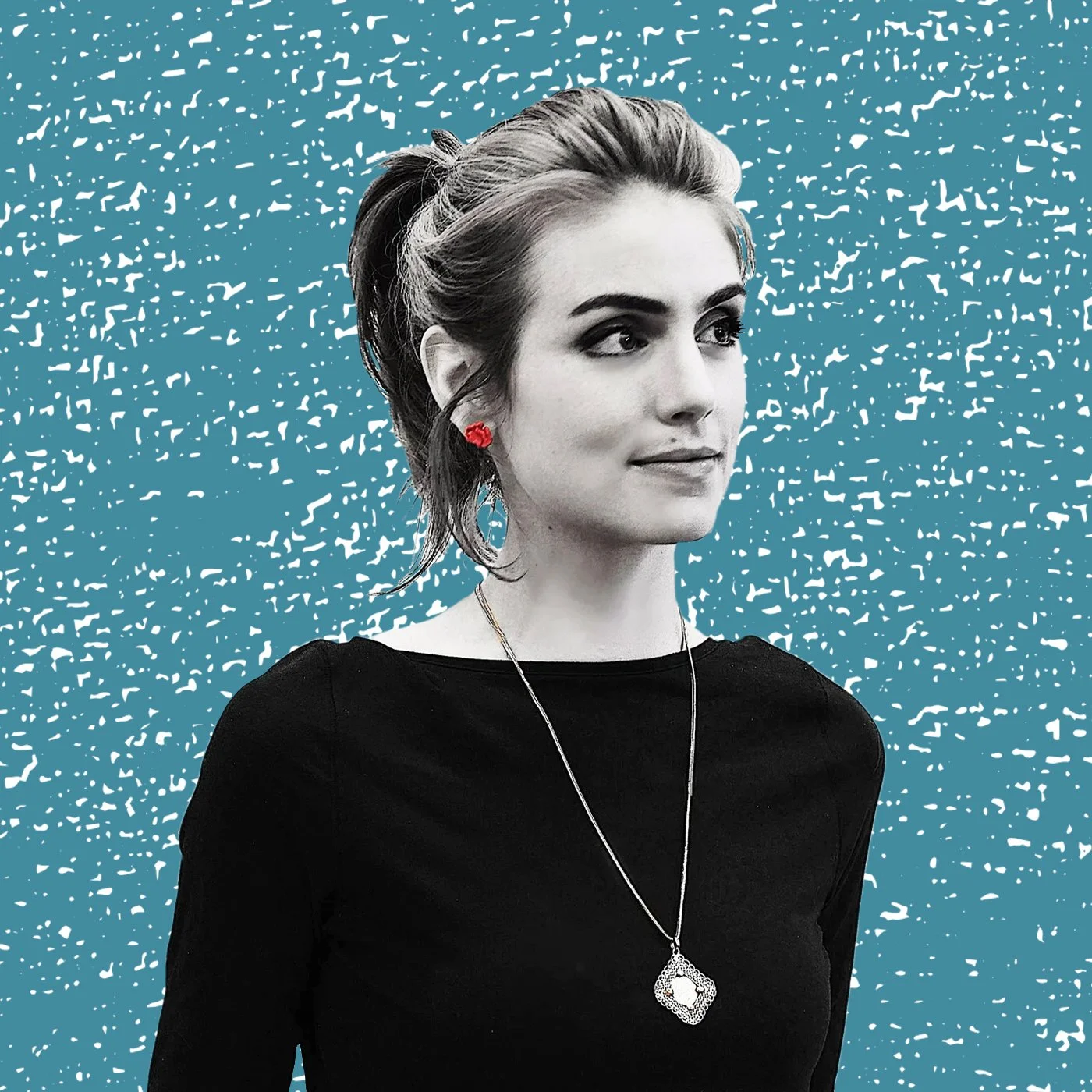
Much like guest Sarah Aziza’s beautiful memoir, The Hollow Half, this week’s show covers a lot of territory and shines light on multiple topics of interest to memoirists. We explore memoir as art—what that means and whether memoirists should strive for their work to be art per se. Aziza’s book is experimental and ambitious, and as such delves into craft choices and process and more. Aziza shares her family history and how her grandmother started to show up in her dreams—and how this memoir took root and ultimately became the gift it is—timely, urgent, and beautiful.
Bio: Sarah Aziza is a Palestinian American writer, translator, and artist with roots in ‘Ibdis and Deir al-Balah, Gaza. She is the author of the genre-bending memoir The Hollow Half, winner of the Palestine Book Award and named a Most Anticipated and Best Book of the Year by Vulture, Vanity Fair, Literary Hub, Elle, Electric Literature, and Mizna, among others. Sarah has lived and worked in Saudi Arabia, Jordan, South Africa, and Palestine, and now resides in the U.S. on occupied Munsee Lenape and Canarsie land.
